Capacity Building Activities essential to #Codexalimentarius – Aiming for more inclusive processes and engaged membership

The Strategic Plan 2014-19 adopted by the Codex Alimentarius Commission membership at its last commission meeting in 2013 reaffirmed the importance of capacity building initiatives dedicated to strengthen Codex structures, support participation and engagement of developing countries and ensure that Codex standards are truly global with an effective contribution from all countries, including developing countries. A specific Strategic Goal (Strategic Goal 3: Facilitate effective participation of all codex members) was dedicated to this purpose. Similar endeavours are also to be pursued under Strategic Goal 2, with the objective to ensure that scientific evidence supporting Codex standards be provided by as many members as possible.

Last month, I had the opportunity to participate in two capacity building initiatives recently held in Canada and the United States, where I was honored to contribute to the scientific and technical program developed by the organizers.

From left to right : Michael Abbott (HC), Dr. Stephen Taylor (FARRP), Jean-Marc Gélinas (HC), Dr. Terry Koerner (HC)

From left to right : Michael Abbott (HC), Dr. Stephen Taylor (FARRP), Jean-Marc Gélinas (HC), Dr. Terry Koerner (HC)

The APEC / Health Canada / FARRP Capacity building initiative on food allergen management was held in Vancouver, British Columbia – Canada, from May 4-8, 2014. I was particularly honoured to contribute to the May 4th session dedicated to introduce the issue of food allergen management as an emerging area of concern that requires added attention by all stakeholders: food industry across the entire supply chain, food regulators and consumers. This session was followed by the Health Canada / FARRP Food Allergen Methodologies Workshop. Canada was supported by several APEC economies to enable participation of a broader audience of food regulators from the Asia Pacific Region to the workshop. A record attendance was registered for this session of the Workshop, which is now considered a regular hub gathering food allergen experts from around the world.

With some members of the US Codex capacity building team

With some members of the US Codex capacity building team

On May 14-15th, 2014, I was also honoured to contribute to the US Codex Partnership initiative, a capacity building activity gathering Codex representatives from around the world, in Washington DC (USA). I had the opportunity to discuss with the workshop participants the various steps that led us to develop and adopt by consensus the Codex strategic plan 2014-19. The workshop was an invaluable opportunity to meet and exchange views with Codex representatives and colleagues from Latin America, the Caribbean, Asia/ Pacific and Africa on Codex activities, upcoming challenges and opportunities of enhanced collaboration.

An invaluable opportunity to meet and discuss with Codex peers and colleagues, from Africa, Asia/Pacific, Latin America and the Caribbean

An invaluable opportunity to meet and discuss with Codex peers and colleagues, from Africa, Asia/Pacific, Latin America and the Caribbean
Scientific evidence that supports the addition of Phytosterols to selected foods and associated health claim

Health Canada’s scientists made available in the scientific literature their rationale for recommending the addition of phytosterols in selected food commodities, as well as the associated health claim related to cholesterol reduction, when certain conditions are met.

The evidence is made available in the following publication of the International Food Risk Analysis Journal and details how the evidence was assessed and deemed acceptable.

Details related to the regulatory authorizations for the addition of plant sterols to foods available for sale in Canada and the conditions of use of the substantiated claims are available on Health Canada’s Website.

Three Consumer and health organisations express support for Canada’s Codex bid

Consumer protection is at the heart of the Codex mandate. It includes protecting consumers’ health worldwide from potential food borne risks through the development of the corresponding science-driven standards. It also includes the protection of consumers from possible deception and fraud related to the composition, identity and labeling of food products traded internationally, through the relevant commodity-based and labeling standards.

I was touched by the support expressed by three (3) major national health and consumer organisations for my candidacy to seek the chair  position of the Codex Alimentarius Commission, at the upcoming July 2014 election.

The support of my nomination by organisations such as the Heart and Stroke FoundationAnaphylaxis Canada or the Canadian Public Health Association is another testament to Canada’s commitment to providing collaborative and impartial leadership to Codex.  It is also recognition by these public health and consumer organisations of the importance of Codex in shaping a consumer protection agenda that supports public health and increased confidence in the safety and integrity of the food supply traded worldwide.

Meet #foodallergen experts at the Health Canada/FARRP Workshop

It is still possible to register and participate in the upcoming Health Canada / FARRP workshop on food allergen methodologies, to be held in Vancouver in about 2 weeks and supported by the Asia Pacific Economic Cooperation (APEC).

Details on the workshop were previously made available on this blog.

Latest Program of the 8th Health Canada / FARRP Workshop on Food Allergen Methodologies

This workshop offers a unique opportunity to meet with world renowned experts in this field and will support stakeholders’ efforts to enhance the management of allergens in food processing practices.

The workshop will also gather representatives of food regulatory agencies from around the world and in particular from the Asia Pacific Region.

Food industry representatives will be able to register for a one day participation, at a reduced cost. This workshop is organised every two years by Health Canada’s Food Directorate and FARRP and represents a unique opportunity of networking and experience sharing in the field of allergen management in the food industry.

Latest updates on food allergen analysis and risk management methods – Workshop organised by HC’s Food Directorate, FARRP and APEC

FARRPAPEC


This is the Eighth Workshop on Food Allergen Methodologies that is co-organised by Health Canada’s Food Directorate and the Food Allergy Research and Resource Program of the University of Nebraska.

The workshop will keep its original objective of bringing together world leading experts in allergen detection methods and to offer a forum for increasing consultation, information exchange, and harmonization in the area of food allergens and analytical methods for food allergens.

The workshop will gather scientists, chemists, analysts and other representatives from government agencies, university, industry and consumer associations, to discuss issues related to detection, identification, characterization, and control of allergen residues in foods.

This year’s meeting has an additional purpose of capacity building and is supported by the Asia Pacific Economic Cooperation (APEC)’s Food safety Cooperation Forum. Experts from the APEC region will be given the opportunity to share best practices and learn from each other about the management of allergens in the food industry.

The workshop will be held in Vancouver Canada from May 6th to May 8th with the following program: Technical Program – Food Allergen Methods Workshop 2014

A special session dedicated to APEC regulators is organised on May 5th.

It is possible for food industry to register for a one day session only, based on their interest.

Registration can take place through the following link on the FARRP Website:Registration webpage

The workshop will offer an invaluable networking opportunity for food allergen management experts in the Asia Pacific Region and from around the world. I hope to see you there.

Great opportunity to work with colleagues from CCAFRICA at #CodexAlimentarius Colloquium

I had the opportunity to take part in the CCAFRICA Codex colloquium co-organised by the US Department of Agriculture, the US Codex office, the Coordination for CCAFRICA, the African Union and the Government of South Africa from March 18-20th, 2014. Delegates from over 15 countries of the region participated in the colloquium which aimed to enhance communication amongst member countries of the region to discuss key Codex files, challenges and agenda items for selected upcoming Codex committees. CCAFRICAI had the opportunity to contribute to the colloquium program through a keynote introduction outlining my views on key Codex strengths and accomplishments, as well as what I consider being our organisation’s upcoming challenges. I also contributed to a panel discussion, engaging the colloquium participants on these same topics with an emphasis on specific challenges relevant to the African region. Some of the points discussed included:

–  the duality of focus on food safety and food security in the African region and the contribution that Codex standards may bring to support food security in the continent ;

–  the level of development of Codex structures in CCAFRICA countries and its impacts on the effective participation in Codex standard development; –  the availability of data from the region, in response to calls for data from Codex scientific advisory bodies;

–  the impacts of private standards versus Codex standards

–  countries’ ability to adopt Codex standards and challenges related to dissemination of information related to Codex standards, guidelines and codes of practice to all food stakeholders in the region. Some of the recommendations brought forward by participants included the need:

–  to strengthen Codex national structures in countries of the region,

–  to enhance engagement of academic organisations from the region to support opportunities for data collection that reflect the regional/African countries’ context in response to calls for data that support Codex standard development and,

–  to continue enhancing awareness of the importance of Codex and Codex standards among the leadership of countries of the region

Participants had also the opportunity to engage in facilitated discussions on agenda items currently identified for some of the upcoming Codex committees: Codex Committee on General Principles (CCGP), Codex Committee on Contaminants in Food (CCCF) and Codex Committee on Pesticide Residues (CCPR). Delegates were able to exchange their views on these items with the purpose to help them prepare national positions

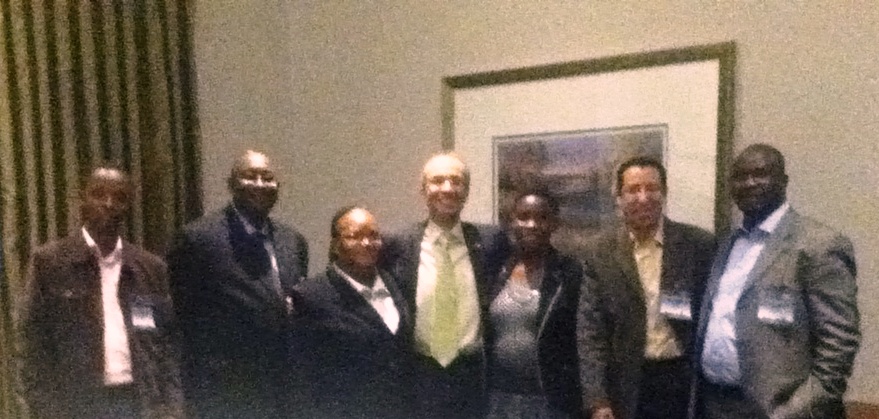
Meeting with Codex peers and colleagues from Kenya, Guinea, Tanzania, Uganda, Morocco and Senegal

Meeting with Codex peers and colleagues from Kenya, Guinea, Tanzania, Uganda, Morocco and Senegal

The colloquium provided me with an excellent opportunity to listen directly and learn from colleagues and peers from CCAFRICA countries about their concerns, challenges and areas of focus related to food safety and quality in general and specifically in the context Codex standard development. It was also an opportunity to engage on a bilateral level with delegates from Cameroon and the regional Coordinator for Africa, Senegal, Guinea, Morocco, Gabon, Tanzania, Uganda, Kenya, Mozambique and South Africa.

I reiterate my thanks and appreciation to the Colloquium organizers and in particular to our gracious South-African hosts for a remarkable organisation.

Election of #Codex chair – Humbled and proud to be Canada’s candidate

In less than 4 months, on July 15th, 2014, the FAO/WHO Codex Alimentarius Commission will be electing a new chair for the upcoming period.

I have been humbled by the decision of the Government of Canada to nominate me as Canada’s candidate for this role. Canada has a long standing support for Codex, as a founding member of the organisation in 1963. Canada continues to be a strong advocate of Codex’s mandate to protect consumers’ health worldwide and to ensure fair practices in the food trade.

I accepted this nomination as a result of my strong belief in Canada’s commitment to providing collaborative and impartial leadership to Codex, and as a result of my keen interest in further contributing, in collaboration with peers and colleagues of the Codex community, to advancing global food safety and quality.

Serving as a vice chair of the commission for the last couple of years has been one of the key highlights of my 17 year career associated with food safety and nutrition. This unique opportunity provided me with the privilege to interact with and learn from food safety leaders from around the world.

Working with such a dedicated and passionate group of food safety, food quality and nutrition professionals in Codex for over a decade, has significantly contributed to my own development and experience as a food scientist and a food regulator. In particular, and as I worked to facilitate the development and adoption of Codex’s strategic plan for 2014-19, I was able to appreciate that despite the differences of opinion and the variety of positions that we may have, we are all united by common principles of evidence-based decision-making and by a common goal to protect consumers’ health and create a level playing field for food trade.

How do I see the Chair’s role:

I consider assuming the chair’s role of an organisation such as the Codex Alimentarius Commission as a commitment to serve the codex membership through active engagement and decisive action, in alignment with the mandate of the Commission.

Serving the membership means to actively seek and listen to members’ interests and concerns and shape the direction based on their insights and input. It also means facilitating and steering the dialogue between members and fostering their engagement in Codex decision-making processes in a manner that upholds Codex’s mandate and Codex’s principles and advances our efforts to develop international food standards that serve as a reference for food regulators and food producers around the world.

I will be using this medium and other posts to share some of my thoughts and views on the responsibilities and duties of the Chairperson of Codex, considering the environment in which Codex is currently evolving. I continue to welcome your input and suggestions either via this blog or by visiting CanadaForCodex.com

#Codex Colloquium of CCLAC concludes with a robust preparation for upcoming #Codex meetings

The second and third days of the CCLAC Codex colloquium, co-organised by the Inter-American Institute for Cooperation on Agriculture (IICA), the Coordination for the Codex Committee for Latin America and the Caribbean (CCLAC): Costa Rica and the United States Department of Agriculture (US DA), held at the headquarters of IICA concluded today March 6th, 2014.
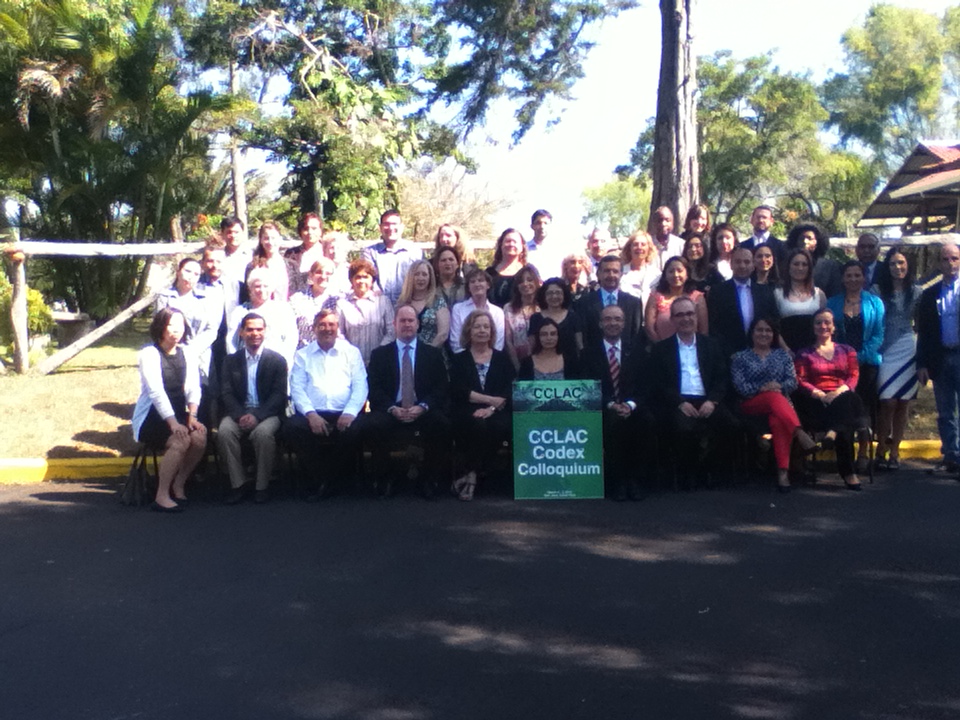
Participants in CCLAC Codex Colloquium

Participants in CCLAC Codex Colloquium

Review of Agenda items of major upcoming meetings

Participants had a chance to engage in extensive discussions on agenda items currently identified for major upcoming Codex committees: Codex Committee on Pesticide Residues (CCPR), Codex Committee on Contaminants in Food (CCCF), Codex Committee on General Principles (CCGP) etc

Delegations were able to exchange their views on these items with the purpose to help them prepare national positions.

Promoting Effective participation / Mitigate language barriers

Members discussed measures to enhance effective participation from the region. In particular, the issue of timely availability of Codex documents in Spanish was raised. Participants also expressed their concern over their inability to systematically contribute effectively in electronic Working Groups (WGs), if these WGs are held in English only. Amongst the ideas that were suggested to mitigate this issue was to have members of the region volunteer to co-chair the e-WG of interest, with the intent to enable availability of documents in Spanish (by the member country from the region, co-chairing) and therefore foster participation into the e-WG in Spanish. The same approach could apply for other languages as warranted. Having members take turns in assuming this function would help share the burden/costs and support the region to be more effectively represented in these proceedings.

Discussion of implementation of the Codex strategic plan and other matters:

Participants had also the opportunity to discuss in groups and at plenary, some aspects related to the implementation of the Codex Strategic Plan 2014-19 and concrete contributions from the region to support such implementation.

Final note:

Codex Costa Rica Team with CCLAC Regional Coordinator (Ms. Isabel Cristina Araya) and Dr. Gilherme Costa, Candidate for Vice Chair (Brazil)

Codex Costa Rica Team with CCLAC Regional Coordinator (Ms. Isabel Cristina Araya) and Dr. Gilherme Costa, Candidate for Vice Chair (Brazil)

Having been given the opportunity to either observe or contribute in the colloquium work, I have appreciated the level of engagement, investment and commitment of participants from the region to Codex proceedings, the importance of Codex’s work and its impact on food regulatory and standard setting activities in the region. I have also witnessed how an effective regional coordination, such as that demonstrated by the Codex team from Costa Rica, as the regional coordinator, can lead to increased members’ awareness of major issues and challenges and foster their involvement and active contribution in Codex work.

With Dr. Gilherme Costa at the CCLAC Codex Colloquium

This meeting gave me the opportunity to exchange ideas and discuss our upcoming food standard setting priorities in Codex with Dr. Gilherme Costa (Brazil), candidate for the Vice Chair position of the CAC.

In front of the Canada Room, where several proceedings took place, at IICA's headquarters

In front of the Canada Room, where several proceedings took place, at IICA’s headquarters

I appreciated the generous and gracious hospitality of IICA as the host organisation, supported by the US DA and Costa Rica as the regional coordinator.  Meeting organisers and participants are to be congratulated for a very well-run and attended colloquium and a flawless and efficient organisation. A very successful event.

Codex Challenges and future directions discussed at the @CODEXCCLAC – IICA Colloquium

IICA CCLAC US DA Colloquium was opened on March 4th 2014.

I was given the opportunity to take part in the Codex Colloquium organised by the Inter-American Institute for Cooperation on Agriculture (IICA), the Coordination for the Codex Committee for Latin America and the Caribbean (CCLAC): Costa Rica and the United States Department of Agriculture (US DA) on Codex standard development.

The colloquium is gathering representatives of most Latin American and Caribbean countries who are either participating in person or through web streaming. The meeting is taking the form of a three day workshop from March 4th to 6th 2014, inclusive.

The meeting is an opportunity to enhance communication amongst member countries of the region, to discuss key Codex files, challenges and agenda items for upcoming Codex committees, with an attempt to share views, data and information and with the goal of coordinating positions of countries from the region.

I will attempt to use this medium to share with you the outcomes of most of the discussions in which I had/ am having the opportunity to contribute.

Today’s (March 4th) proceedings were opened by officials from IICA, US DA and senior officials of the Government of Costa Rica: the Vice Minister of the Economy and the CCLAC coordinator.

My colleague Dr. Guilherme Costa (Brazil) and I had the opportunity to open the discussions on challenges to be faced by Codex as an organisation in the upcoming period, as well as the way we would address such challenges as engaged members. Some of the challenges discussed by participants included:

– Sustainability of Codex as an organisation and the sustainability of our ability to contribute to codex standard development as members. The discussion also encompassed the way to address the sustainability of scientific advice and ways to ensure timely availability of key scientific assessments to inform health protection standards

– Relevance of codex standards and their responsiveness to members’ needs and to emerging issues

– Effective participation of all members in Codex standard development and ways to enhance it, in particular for developing nations

– Workflow management and timely advancement of codex standards

– Ways to address current polarisation of positions witnessed over the latest couple of commission meetings

Ms. Isabel Cristina Araya, Coordinator for CCLAC, provided hers and CCLAC’s perspective on these challenges and others.

Other open discussions amongst participants were held supported by an initial presentation made by a member or an expert from the region. These discussions focussed on:

– Preparation of country positions for various codex committee agenda items and the various processes followed to engage domestic stakeholders on these positions

– Coordination of positions within the CCLAC community and with other regions

– Fostering the availability of scientific data from the region, in response to JECFA’s calls for data

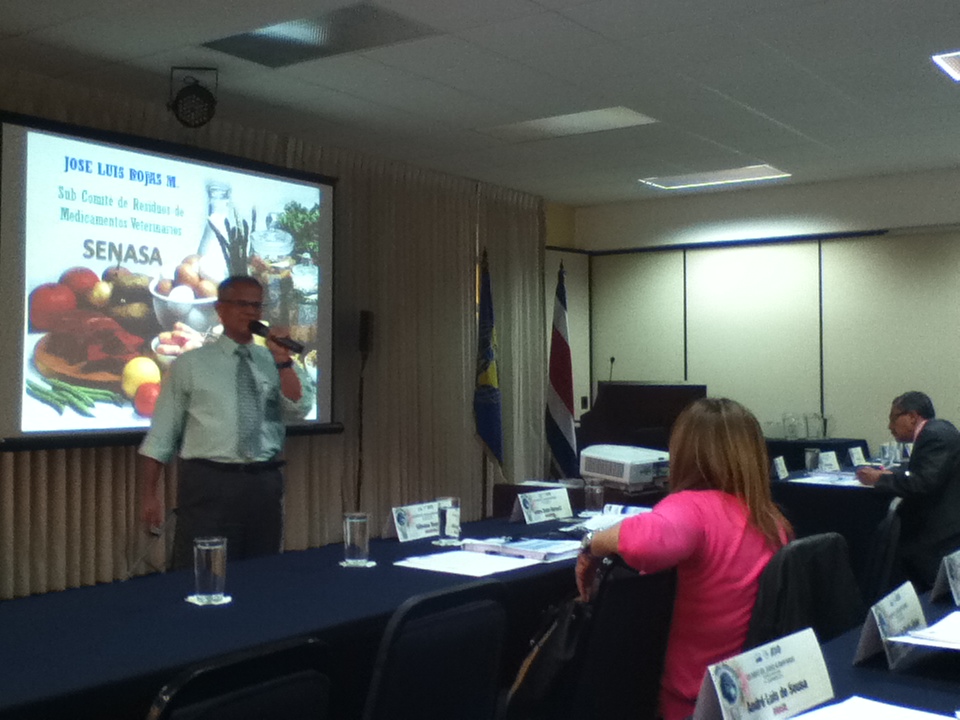
Dr. Jose Luis Rojas Martinez, discussing the importance of scientific data provided by the Region in response to JECFA and other expert bodies calls

Dr. Jose Luis Rojas Martinez, discussing the importance of scientific data provided by the Region in response to JECFA and other expert bodies calls

Participants congratulated the CCLAC coordination team for their exemplary efforts to engage and mobilise colleagues across the region in support of developing positions for key Codex agenda items. The pioneering efforts of CCLAC’s coordination in accessing and using virtual meeting tools on a regular basis to foster members’ participation across the region were highlighted.

Members of the CCLAC Coordination team

Members of the CCLAC Coordination team

This first session of the meeting also enabled an excellent networking opportunity amongst/between the various delegations participating from the Latin American and Caribbean region and other guest participants.

Proposed changes to nutrition labelling rules in the United States

Proposed Label - Whats the Difference

The US Food and Drug Administration announced proposed changes to the nutrition facts panels that appear on prepackaged foods, as part of an overhaul of nutrition labeling requirements.

The proposed changes are quite significant and include updates of the Daily values for some nutrients to reflect the latest scientific advice provided by the Institute of Medicine (IOM). They also include updates to the serving size that ought to be presented on the food label as well as the list of core nutrients subject to mandatory declaration.

Questions were posed as to whether Canada’s requirements are meant to follow suit. The Government of Canada has committed through the most recent Speech from the Throne to consult with Canadian consumers and parents with the purpose of improving nutrition information on food labels. This step is currently under way and is critical to characterize Canadian consumers’ understanding of nutrition information presented on food labels, consumers’ interests, their concerns and what they identify as areas requiring improvement.

Canada’s nutrition labelling requirements are also grounded in scientific evidence. In fact, a number of reviews of the IOM were co-funded by US agencies and Health Canada. This will likely support further alignment of some requirements related to nutrition labeling between Canada and the United States.

Reflecting the Canadian context will be pivotal for any changes made to Canada’s nutrition labeling requirements to better serve Canadian consumers’ needs and help them make informed nutrition and dietary decisions.