Approche basée sur l’analyse des risques pour l’addition de vitamines et minéraux à certains aliments – pour consultation

Les scientifiques de la direction des aliments de Santé Canada ont publié dans la section: Communications sur l’analyse des risques alimentaires de la Revue Internationale de l’Analyse des Risques Alimentaires (RIARA) leur approche proposée pour l’établissement de teneurs maximales de vitamines et minéraux destinés à être ajoutés à certains aliments, qui pourraient devenir éligibles à des autorisations temporaires de mise sur le marché au Canada. Cette approche est basée sur une analyse des risques alimentaires.

Ce document technique est ouvert à la consultation des pairs et des parties prenantes, pour une période de 60 jours à compter du 2 juin 2014.

L’article peut être consulté via lien suivant.

Les commentaires peuvent être envoyés à la direction des aliments de Santé Canada, à l’adresse : smiu-ugdi@hc-sc.gc.ca

Proposed Risk Analysis Approach to set Maximum Levels for Vitamins & Minerals in Supplemented Foods – for Consultation

Health Canada’s Food Directorate scientists have published in the “Risk Analysis Communications” Section of the International Food Risk Analysis Journal (IFRAJ), their proposed risk analysis-based approach to set maximum levels for the addition of vitamins and minerals to food products that would become eligible for Temporary Marketing Authorization, as supplemented foods. This technical paper is open for consultation during a period of 60 days, starting June 2nd, 2014. Comments can be sent to smiu-ugdi@hc-sc.gc.ca

The paper is accessible through the link attached.

Capacity Building Activities essential to #Codexalimentarius – Aiming for more inclusive processes and engaged membership

The Strategic Plan 2014-19 adopted by the Codex Alimentarius Commission membership at its last commission meeting in 2013 reaffirmed the importance of capacity building initiatives dedicated to strengthen Codex structures, support participation and engagement of developing countries and ensure that Codex standards are truly global with an effective contribution from all countries, including developing countries. A specific Strategic Goal (Strategic Goal 3: Facilitate effective participation of all codex members) was dedicated to this purpose. Similar endeavours are also to be pursued under Strategic Goal 2, with the objective to ensure that scientific evidence supporting Codex standards be provided by as many members as possible.

Last month, I had the opportunity to participate in two capacity building initiatives recently held in Canada and the United States, where I was honored to contribute to the scientific and technical program developed by the organizers.

From left to right : Michael Abbott (HC), Dr. Stephen Taylor (FARRP), Jean-Marc Gélinas (HC), Dr. Terry Koerner (HC)

From left to right : Michael Abbott (HC), Dr. Stephen Taylor (FARRP), Jean-Marc Gélinas (HC), Dr. Terry Koerner (HC)

The APEC / Health Canada / FARRP Capacity building initiative on food allergen management was held in Vancouver, British Columbia – Canada, from May 4-8, 2014. I was particularly honoured to contribute to the May 4th session dedicated to introduce the issue of food allergen management as an emerging area of concern that requires added attention by all stakeholders: food industry across the entire supply chain, food regulators and consumers. This session was followed by the Health Canada / FARRP Food Allergen Methodologies Workshop. Canada was supported by several APEC economies to enable participation of a broader audience of food regulators from the Asia Pacific Region to the workshop. A record attendance was registered for this session of the Workshop, which is now considered a regular hub gathering food allergen experts from around the world.
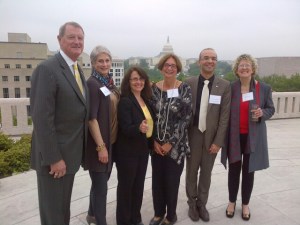
With some members of the US Codex capacity building team

With some members of the US Codex capacity building team

On May 14-15th, 2014, I was also honoured to contribute to the US Codex Partnership initiative, a capacity building activity gathering Codex representatives from around the world, in Washington DC (USA). I had the opportunity to discuss with the workshop participants the various steps that led us to develop and adopt by consensus the Codex strategic plan 2014-19. The workshop was an invaluable opportunity to meet and exchange views with Codex representatives and colleagues from Latin America, the Caribbean, Asia/ Pacific and Africa on Codex activities, upcoming challenges and opportunities of enhanced collaboration.

An invaluable opportunity to meet and discuss with Codex peers and colleagues, from Africa, Asia/Pacific, Latin America and the Caribbean
An invaluable opportunity to meet and discuss with Codex peers and colleagues, from Africa, Asia/Pacific, Latin America and the Caribbean

Information scientifique étayant l’addition de stérols végétaux à certains aliments et son allégation santé

Les scientifiques de la direction des aliments de Santé Canada ont rendu disponibles dans la littérature scientifique l’analyse qui les a conduit à recommander l’addition de stérols végétaux à certains aliments, ainsi que les conditions d’acceptation d’une allégation santé relative à la réduction du cholestérol sanguin.

Cette publication est désormais disponible dans la dernière édition de la Revue Internationale de l’Analyse des Risques : via le Lien ci-joint.

Les conditions réglementaires liées à l’addition de stérols végétaux à certains aliments autorisés à la vente au Canada sont détaillées sur les pages “aliments et nutrition” de Santé Canada.

Scientific evidence that supports the addition of Phytosterols to selected foods and associated health claim

Health Canada’s scientists made available in the scientific literature their rationale for recommending the addition of phytosterols in selected food commodities, as well as the associated health claim related to cholesterol reduction, when certain conditions are met.

The evidence is made available in the following publication of the International Food Risk Analysis Journal and details how the evidence was assessed and deemed acceptable.

Details related to the regulatory authorizations for the addition of plant sterols to foods available for sale in Canada and the conditions of use of the substantiated claims are available on Health Canada’s Website.

سعيد بلقاء الزملاء المختصين بسلامة و جودة الغذاء بالشرق الأدنى

خلاصة مشاركتي في مؤتمر سلامة و جودة الأغذية المنظم في أبوظبي – دولة الإمارات العربية المتحدة – ماي ٢٠١٤ –  Summary of my participation in the Food Safety and Quality Conference – Abu Dhabi, UAE, May 2014

أتاحت لي الفرصة للمشاركة في مؤتمر سلامة و جودة الغذاء المنعقد بأبوظبي، في دولة الإمارات العربية المتحدة ٧-٨ ماي/آذار. وقد سمحت لي هذه المشاركة من تقديم مهمة و إنجازات الدستور الغذائي في الفترة الاخيرة على الصعيد العالمي و أهميتها على الصعيد لإقليمي، لما تمكنه من فرص التوافق في صياغة و تبني معايير سلامة و جودة الغذاء في المنطقة. وقد تمكنت من خلال هذه المشاركة على تبادل الآراء و التجارب مع الزملاء المختصينن في المجالات المعنية و اصحاب المصلحة من الجامعيين و مصنعي الأغذية والمسؤولين في إدارات تقييس و مراقبة المنتجات الغذائية.  وقد أكدت للزملاءالكرام التزام كندا و التزامي شخصيا، كمرشح لرئاسة الهيئة، بدعم هيئة الدستور الغذائي عن طريق تكريس ريادة حيادية، غير منحازة و متمسكة بمبادئ التعاون و تسهيل اتفاق الآراء بين مختلف أعظاء الهيئة في صياغة معايير الغذاء. وفي وجه عوامل و محركات التغيير التي تواجهها سلامة وجودة الغذاء، أكدنا جميعاعلى ظرورة العمل سويا على دعم سلامة الغذاء ومعايير الجودة العالمية الى الامام

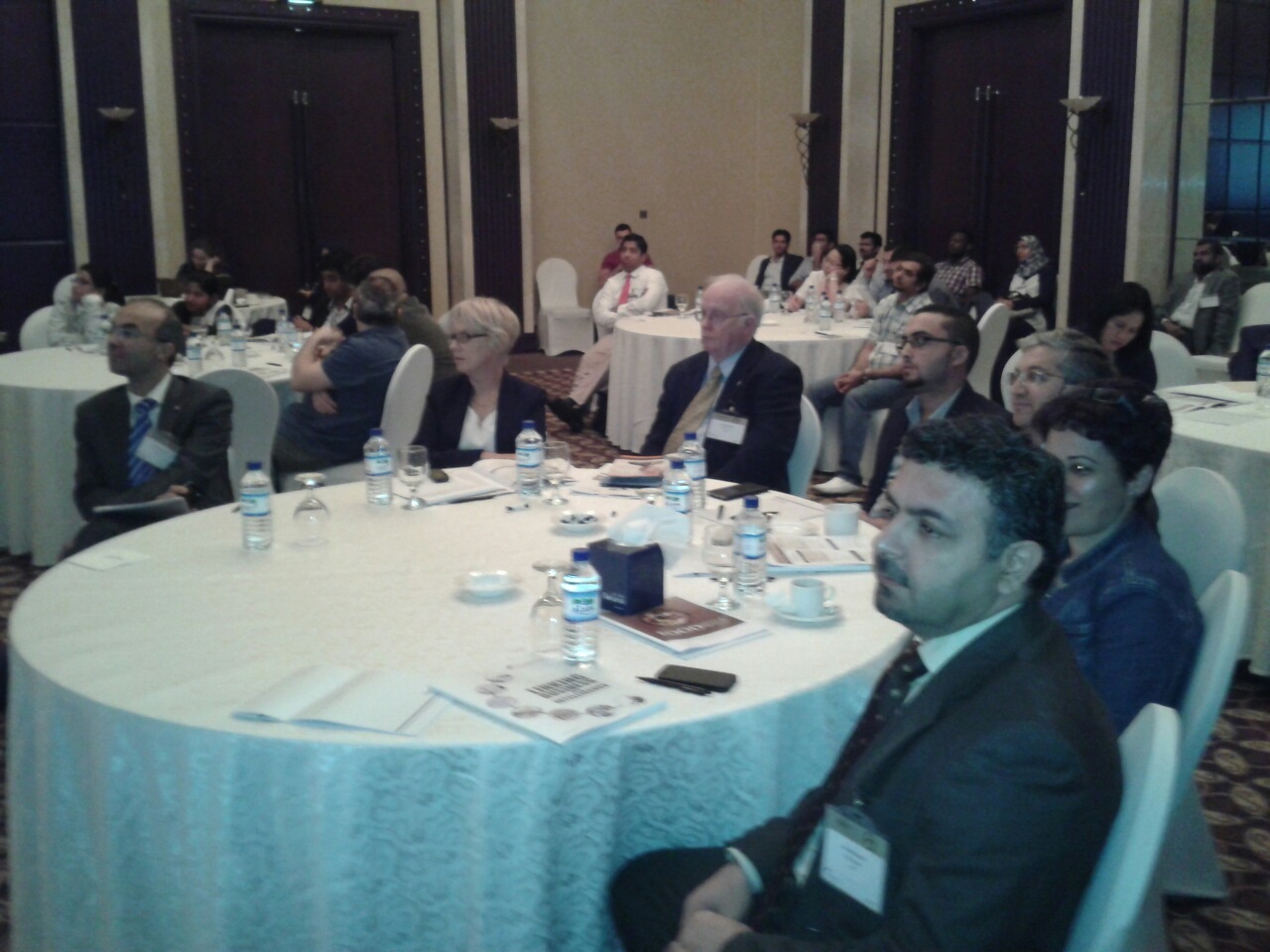
With Food Safety Colleagues of the NEA

Conference Program

Presentation made during the Conference : Codex Accomplishments and relevance to the Near East Region

English text : Great opportunity to meet and engage with food safety and quality peers and experts from the Near East Region

I was given the opportunity to participate in the Food and Safety and Quality conference held in Abu Dhabi, United Arab Emirates from 7-8 May 2014.

This participation allowed me to share the accomplishments of the Codex Alimentarius Commission, as the preeminent food international standard setter and the impacts of its standards at the regional level, with opportunities to drive convergence of food safety and quality standards across the Near East region.

Meeting with food safety and quality experts representing the broad stakeholder community from the region: academia, food processors and regulators, allowed me to hear and share views, experiences and insights into current challenges and opportunities in food standard development activities for the region. This visit allowed me to reiterate to colleagues from the region, Canada’s commitments, and mine as a candidate for the chair position of the Codex Alimentarius Commission, to impartial and collaborative leadership, with a focus on fostering an open dialogue amongst the Codex membership that supports consensus development, as a core value guiding Codex operations – Another milestone in “Working together to Advance Global Food Safety and Quality”.


Trois organisations de consommateurs et de Santé Publique expriment leur soutien à la candidature du Canada à la présidence du Codex

La protection des consommateurs est au cœur de la mission du Codex Alimentarius. Ceci implique non seulement la protection de la santé des consommateurs des risques potentiels associés à certains dangers alimentaires, notamment les pathogènes et autres contaminants alimentaires et ce, à travers les normes de sécurité sanitaire ; mais aussi la protection des consommateurs des tentatives de fraude ou de mauvaise représentation des aliments à travers les normes de qualité et/ou d’étiquetage des aliments qui sont échangés à l’échelle internationale.

J’ai été très touché par le soutien exprimé par trois (3) associations nationales de consommateurs et de santé publique du Canada pour ma nomination à être candidat à la présidence de la Commission du Codex Alimentarius, dont l’élection se tiendra le 15 juillet prochain.

Le soutien exprimé par des organisations comme la fondation Canadienne des maladies du cœur et de l’AVC, d’Anaphylaxie Canada ou de l’Association de Santé Publique du Canada est une reconnaissance au modèle de leadership impartial et collaboratif prôné par le Canada pour la présidence du Codex Alimentarius. C’est aussi une reconnaissance de nos acteurs nationaux de santé publique et de protection des consommateurs quant à l’importance du Codex à façonner et promouvoir la protection des consommateurs à l’échelle globale, en préservant la sécurité sanitaire et l’intégrité de l’apport alimentaire échangé à l’échelle internationale.

Three Consumer and health organisations express support for Canada’s Codex bid

Consumer protection is at the heart of the Codex mandate. It includes protecting consumers’ health worldwide from potential food borne risks through the development of the corresponding science-driven standards. It also includes the protection of consumers from possible deception and fraud related to the composition, identity and labeling of food products traded internationally, through the relevant commodity-based and labeling standards.

I was touched by the support expressed by three (3) major national health and consumer organisations for my candidacy to seek the chair  position of the Codex Alimentarius Commission, at the upcoming July 2014 election.

The support of my nomination by organisations such as the Heart and Stroke FoundationAnaphylaxis Canada or the Canadian Public Health Association is another testament to Canada’s commitment to providing collaborative and impartial leadership to Codex.  It is also recognition by these public health and consumer organisations of the importance of Codex in shaping a consumer protection agenda that supports public health and increased confidence in the safety and integrity of the food supply traded worldwide.

Meet #foodallergen experts at the Health Canada/FARRP Workshop

It is still possible to register and participate in the upcoming Health Canada / FARRP workshop on food allergen methodologies, to be held in Vancouver in about 2 weeks and supported by the Asia Pacific Economic Cooperation (APEC).

Details on the workshop were previously made available on this blog.

Latest Program of the 8th Health Canada / FARRP Workshop on Food Allergen Methodologies

This workshop offers a unique opportunity to meet with world renowned experts in this field and will support stakeholders’ efforts to enhance the management of allergens in food processing practices.

The workshop will also gather representatives of food regulatory agencies from around the world and in particular from the Asia Pacific Region.

Food industry representatives will be able to register for a one day participation, at a reduced cost. This workshop is organised every two years by Health Canada’s Food Directorate and FARRP and represents a unique opportunity of networking and experience sharing in the field of allergen management in the food industry.